

Transaction Coordinator vs Real Estate Assistant: Which Is Better for Working From Home?
Understanding the Two Roles
While transaction coordinators and real estate assistants both support agents, their responsibilities and work styles are very different. Understanding these differences is essential when choosing a work-from-home career.
What a Transaction Coordinator Does
A transaction coordinator focuses on the contract-to-close process. Their job begins after a contract is signed and ends when the transaction closes. This role is highly structured and deadline-driven.
What a Real Estate Assistant Does
A real estate assistant often supports an agent with a wide range of tasks, including scheduling, marketing, listing coordination, social media, and sometimes transaction work. The role is broader and less defined.
Which Role Is More Work-From-Home Friendly?
Transaction coordination is more naturally remote. Most tasks are digital, and communication is primarily email-based. Real estate assistants may be expected to attend showings, meetings, or handle in-person tasks depending on the agent.
Pay Differences Between the Two Roles
Transaction coordinators are often paid per file, allowing income to scale. Real estate assistants are typically paid hourly or salaried, which can limit earning potential.
Stress and Boundaries
Transaction coordinators usually work with clear timelines and defined responsibilities. Real estate assistants may face unpredictable schedules and shifting expectations.
Which Is Better Long-Term?
For those seeking flexible, remote, scalable work, transaction coordination is often the better choice. For those who enjoy variety and team-based work, a real estate assistant role may be more appealing.
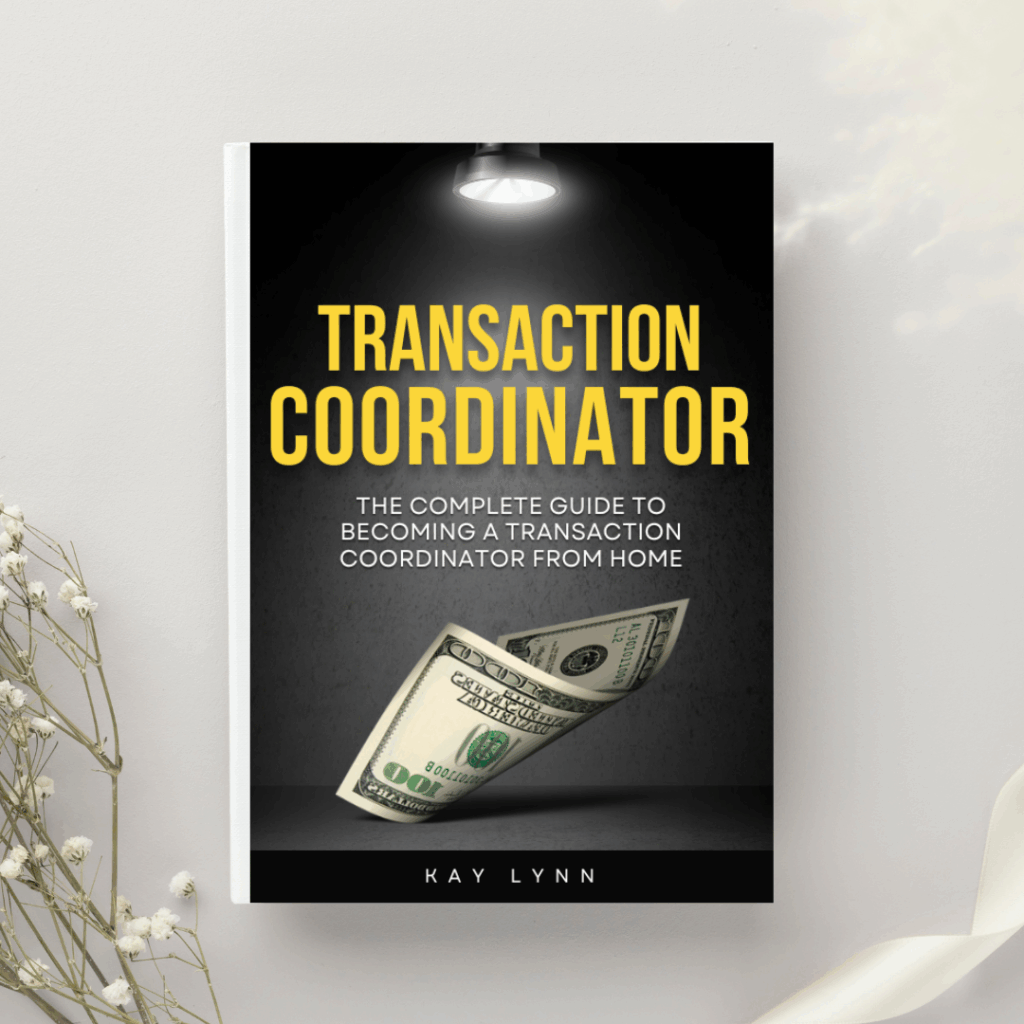

Instantly download our complete Transaction Coordinator Book and get everything you need in one place—whenever you need it. Inside, you’ll unlock all 20 training modules, plus direct links to all the spreadsheets, templates, and tools that TCs use to run a profitable business.