

Is Transaction Coordination Worth It? Pros, Cons, and Real-World Expectations
Are you wondering if transaction coordination is the right career path for you? Whether you’re considering a work-from-home job, looking for a flexible career in real estate, or evaluating a side hustle with real income potential, transaction coordination can be highly rewarding—but it’s not for everyone.
In this detailed guide, we’ll cover:
- What a transaction coordinator does
- Pros of becoming a transaction coordinator
- Cons and challenges of the role
- Income potential and fee structures
- Real-world expectations
- How beginners can get started
- Resources to help you succeed
By the end, you’ll have a clear understanding of whether transaction coordination is worth pursuing—and how to set yourself up for success.
What Is a Transaction Coordinator?
A transaction coordinator (TC) is a real estate professional who handles the administrative and compliance aspects of a real estate transaction from contract to close.
Core Responsibilities
- Reviewing contracts for accuracy
- Managing deadlines (inspection, financing, appraisal, and closing)
- Handling disclosures and compliance documents
- Communicating with agents, clients, lenders, and title companies
- Organizing transaction files
What TCs do NOT do:
- Negotiate sales or prices
- Show properties
- Represent buyers or sellers legally
Transaction coordinators provide the backbone of a smooth real estate transaction, allowing agents to focus on sales and client relationships.
Pros of Becoming a Transaction Coordinator
Transaction coordination offers many benefits that make it attractive for people seeking a flexible, structured career.
1. Work From Home Opportunities
- Most transaction coordinators can work remotely
- Tasks like managing timelines, documents, and communications are digital
- Flexibility allows for part-time or full-time schedules
2. Low Startup Costs
- You don’t need a real estate license in many states
- Basic tools include a computer, internet, and transaction management software
- Templates and spreadsheets streamline workflow
3. Growing Demand
- Real estate transactions are increasing nationwide
- Agents are outsourcing administrative work to focus on sales
- Experienced TCs are consistently in demand
4. Predictable Workflow
- Transactions follow a structured process
- Once systems and templates are in place, work becomes repeatable and manageable
- Helps reduce stress compared to unpredictable sales or commission-based roles
5. Scalable Income
- TCs are usually paid per transaction
- Typical fees range from $300–$600 per transaction
- Experienced TCs with multiple clients can earn $8,000–$15,000+ per month
Cons and Challenges of Transaction Coordination
While transaction coordination is rewarding, there are challenges you should consider:
1. Deadlines Are Critical
- Missing a deadline can delay or derail a transaction
- Requires attention to detail and consistent follow-up
2. No Guaranteed Salary
- Most TCs work as independent contractors
- Income depends on the number of transactions and fees
- Start-up months may be slow before building a steady client base
3. Repetitive Tasks
- Daily work includes reviewing contracts, sending reminders, and tracking documents
- Can feel repetitive for some personalities
4. Client and Agent Communication
- Managing expectations requires diplomacy and professionalism
- Multiple stakeholders per transaction can create pressure
5. Compliance Responsibility
- Ensuring all disclosures and brokerage requirements are met is critical
- Mistakes can cause legal or financial repercussions for clients and agents
Income Potential for Transaction Coordinators
Understanding the real-world income potential helps determine if transaction coordination is worth it.
Typical Per-Transaction Fees
- Beginner: $300–$400
- Experienced: $400–$600
- Luxury or complex transactions: $600+
Monthly Income Examples
| Transactions/Month | Fee per Transaction | Monthly Income |
|---|---|---|
| 10 | $350 | $3,500 |
| 15 | $400 | $6,000 |
| 20 | $450 | $9,000 |
| 25 | $500 | $12,500 |
| 30 | $550 | $16,500 |
Experienced TCs often handle multiple agents or brokerages to maximize income.
Annual Income Potential
| Transactions/Year | Fee per Transaction | Annual Income |
|---|---|---|
| 100 | $350 | $35,000 |
| 200 | $400 | $80,000 |
| 250 | $450 | $112,500 |
| 300 | $500 | $150,000 |
This shows how scalable the role can be when systems and clients are in place.
Real-World Expectations
When considering transaction coordination, it’s important to set realistic expectations:
- Time Commitment: A single transaction can take several hours across weeks, depending on complexity.
- Start-Up Period: Beginners may need 1–3 months to gain confidence and secure consistent clients.
- Client Relationships: Building trust with agents is crucial for repeat business.
- Continuous Learning: Laws, regulations, and brokerage requirements change, so TCs must stay informed.
How to Get Started as a Transaction Coordinator
Step 1: Learn the Basics
- Understand contract flow and required documents
- Know key deadlines and contingencies
- Familiarize yourself with real estate terminology
Step 2: Choose Your Work Model
- Independent contractor: Set your fees, schedule, and clients
- In-house TC: Work for a brokerage with a salary or per-file rate
Step 3: Learn the Tools
- Transaction management software
- E-signature platforms
- Cloud storage
- Spreadsheets and templates
Step 4: Build Systems and Templates
- Pre-made spreadsheets for deadlines
- Checklists for compliance
- Document tracking templates
Step 5: Find Clients
- Network with local agents and brokerages
- Use referrals from satisfied clients
- Join online real estate communities
Tools and Resources That Make Transaction Coordination Easier
- Templates & Checklists: Reduce mistakes and streamline processes
- Spreadsheets: Track deadlines, tasks, and client progress
- Automation Tools: Email reminders, document uploads, and alerts
- Guided Training: Accelerates learning curve for beginners
Is Transaction Coordination Worth It?
Pros:
- Work from home flexibility
- Low startup costs
- Growing demand
- Predictable workflow
- Scalable income
Cons:
- Deadlines are critical
- Income depends on transactions
- Repetitive tasks
- Multiple stakeholders
- Compliance responsibility
For most people, the pros outweigh the cons—especially if you use systems, templates, and training to manage workload efficiently.
Download the Transaction Coordinator Course Ebook
If you’re ready to take the next step and start a successful career as a transaction coordinator, our course ebook is the fastest way to get started.
It’s an instant download and includes:
- Step-by-step guides for every stage of transaction coordination
- Pre-made spreadsheets to track deadlines, clients, and tasks
- Templates for documents, communications, and checklists
- Tips to maximize income and handle multiple clients efficiently
Instead of spending months figuring things out, you can start working confidently from home today using proven systems and templates.
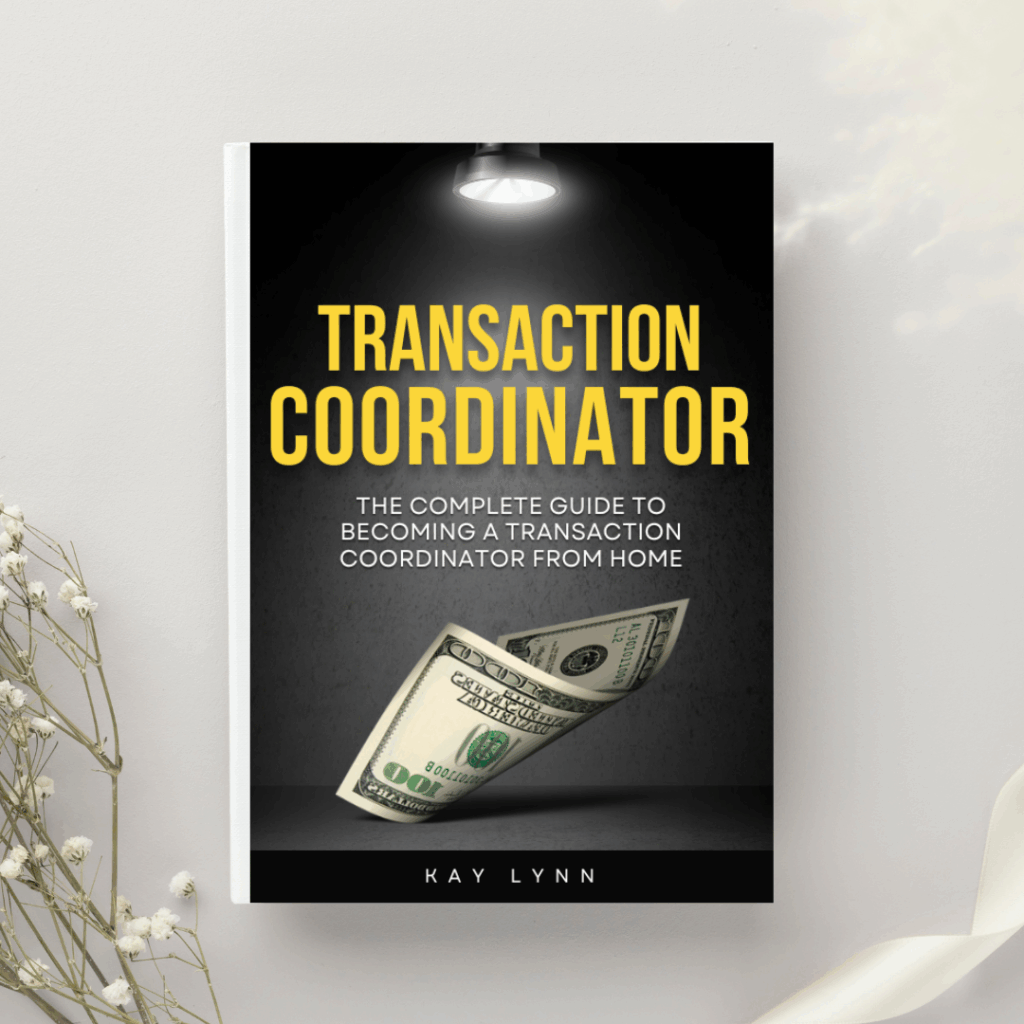

Instantly download our complete Transaction Coordinator Book and get everything you need in one place—whenever you need it. Inside, you’ll unlock all 20 training modules, plus direct links to all the spreadsheets, templates, and tools that TCs use to run a profitable business.