

How to Start a Transaction Coordinator Business Step-By-Step in 2026
Starting your own Transaction Coordinator (TC) business is one of the fastest ways to earn real income from home in 2026. This is especially ideal for people who are organized, detail-oriented, and want flexible work without a real estate license.
With the real estate industry booming, every agent needs help managing transactions. As a TC, you become their go-to person for handling contracts, deadlines, communications, and all the paperwork that ensures smooth closings.
This guide will take you step-by-step, showing you how to start, set up systems, find clients, and grow a profitable business — all from home. Plus, you’ll learn where to get free templates, scripts, checklists, and training to make the process even easier.
Why Starting a Transaction Coordinator Business Is Smart
Before diving into the steps, let’s look at why TCs are in high demand:
1. Real Estate Agents Are Overloaded
Agents want to focus on showings and sales, not contracts and deadlines. A TC takes the administrative workload off their plate, which makes you highly valuable.
2. High Earning Potential
A single TC file can pay anywhere from $350–$600. With 10–15 files per month, you can earn $3,000–$6,000+, even part-time.
3. Work From Home
You can manage multiple transactions entirely online. All you need is a computer, internet connection, and organizational tools.
4. Low Barrier to Entry
No license or previous experience is required — just attention to detail, organization, and communication skills.
5. Scalable Income
Once you have your systems in place, you can manage multiple clients simultaneously, even expanding into marketing, virtual assistance, or compliance services for additional revenue.
Step 1: Learn the Transaction Coordinator Process
The first step is understanding what TCs do and how transactions flow from contract to close.
Core TC Responsibilities Include:
- Reviewing contracts and addenda
- Tracking critical deadlines
- Scheduling inspections, appraisals, and walkthroughs
- Communicating with agents, buyers, sellers, title companies, and lenders
- Preparing and sending disclosure documents
- Organizing and storing files for compliance
You don’t need a real estate license to handle these tasks — you’re managing paperwork, not giving advice.
Tip: Use a comprehensive free TC course like the one on this website. It includes checklists, templates, scripts, and spreadsheets to get you ready to start your business in weeks.
Step 2: Set Up Your TC Business
Running a TC business requires some basic setup. Here’s what you need:
1. Choose a Business Name
Pick a name that is professional and memorable. Examples:
- “Your Name Transaction Services”
- “Effortless Closings”
- “Remote Real Estate Coordinator”
2. Register Your Business (Optional)
For credibility and legal protection, consider forming an LLC. Many new TCs start as sole proprietors and upgrade later.
3. Create a Website or Landing Page
A simple site gives agents confidence. Include:
- Services offered
- Pricing
- Contact info
- Testimonials (once you have them)
Your website can also host your free training, guides, or templates, attracting new clients.
4. Set Up Professional Email and Phone
Use a professional email address (Gmail with your domain works well) and consider a business phone line or Google Voice number.
5. Organize Your Workspace
Even if you work from home, have:
- Computer or laptop
- High-speed internet
- Digital file storage (Google Drive, Dropbox)
- Task management system (Trello, ClickUp, Asana)
Step 3: Understand Contract-to-Close Workflow
To be a successful TC, you must understand the real estate transaction timeline:
- Contract Execution – Receive signed purchase agreement
- Open Escrow / Title – Ensure funds and contracts are properly filed
- Inspections and Appraisals – Schedule and track deadlines
- Loan Processing – Communicate with lenders and track loan approval
- Disclosures – Send required documents to buyers and sellers
- Repairs / Negotiations – Track inspection repair requests
- Closing Preparation – Prepare closing docs and ensure signatures
- Post-Closing – Store all files and compliance documents
Most TCs use a master folder structure to keep everything organized:
PROPERTY ADDRESS – BUYER/SELLER – Closing Date
1 – Executed Contract & Addenda
2 – Disclosures (Buyer)
3 – Disclosures (Seller)
4 – Inspections & Repairs
5 – Appraisal & Loan Docs
6 – HOA / Condo Docs
7 – Title / Escrow / Attorney Docs
8 – Communication Logs
9 – Compliance Docs
10 – Final Closing Docs
11 – Post-Closing Files
This method ensures nothing slips through the cracks and impresses your clients.
Step 4: Pricing Your TC Services
Pricing varies based on market and experience. Typical beginner rates:
- Buyer or Seller File: $350–$450 per file
- Listing Coordination: $150–$250 per file
- Add-On Services: Rush closings, extra communication, or marketing support
Once you gain experience, you can increase rates and manage multiple agents, exponentially growing your income.
Step 5: Find Your First Clients
Here’s where you turn knowledge into income. The goal is to connect with agents who need help immediately.
Top Methods to Find Agents:
- Local Facebook Groups
Search for groups like Real Estate Agents in [City] or Real Estate Networking. Post professionally offering your TC services. - Email Outreach
Send a concise email introducing yourself and your services. Offer a first file discount or free consultation. - Networking
Attend open houses, real estate conferences, or virtual meetups. - Referrals
Once you help one agent, ask for referrals. Word-of-mouth is powerful in real estate.
Pro Tip: Focus on building relationships rather than “selling.” Agents hire TCs they trust to handle their deals smoothly.
Step 6: Build Systems for Scaling
Once you have clients, you need repeatable systems to grow without stress:
- Checklists for each transaction
- Email templates for agents, buyers, sellers
- Automated reminders for deadlines
- Digital file organization
By systematizing, you can handle multiple files per month, hitting $3K–$6K/month consistently.
Step 7: Expand Your Business
After 3–6 months, consider adding:
- Virtual Assistant Services – Email management, marketing, lead follow-ups
- Marketing Packages – Social media posts, listing flyers, blog content
- Compliance Services – Audit agent files for completeness and accuracy
This allows you to increase income without adding more hours.
Common Myths About Transaction Coordinating
Myth 1: You need a real estate license.
Truth: TCs handle paperwork only — no license needed.
Myth 2: It takes years to start earning.
Truth: Beginners with free training and outreach often land their first client within 30–60 days.
Myth 3: Income is low.
Truth: $3K–$6K/month part-time is standard; full-time TCs can earn $8K–$12K or more.
Tools Every Transaction Coordinator Needs
- Google Drive / Dropbox – Secure cloud storage
- Trello / ClickUp / Asana – Task management
- Canva – Optional for marketing assets
- Zoom / Google Meet – Virtual meetings
- Email Templates & Checklists – Included in free training
Bonus: This website provides all templates, scripts, and spreadsheets so you don’t have to reinvent the wheel.
Why Moms, Students, and Beginners Can Excel as TCs
- Flexible hours – Work when convenient
- Remote-friendly – Laptop + internet is all you need
- High demand – Agents are always hiring TCs
- Low startup costs – Almost zero investment
- Growth potential – Scale as much as you want
Step 8: Tips for Success
- Be organized: Use master folders and checklists
- Communicate clearly and professionally
- Deliver work on time or early
- Keep learning: Use free training to stay updated
- Focus on relationship-building, not just money
Final Thoughts: Start Your TC Business Today
The real estate industry is booming. Agents are overwhelmed, and they desperately need TCs who can take paperwork off their plate.
Starting your own TC business is low-cost, beginner-friendly, and highly profitable. Moms, students, and anyone looking for remote income can start earning $3K–$6K/month — all from home.
✅ Ready to start your Transaction Coordinator business?
Go immediately to our TC Academy for free training, templates, checklists, and scripts to launch your first client..
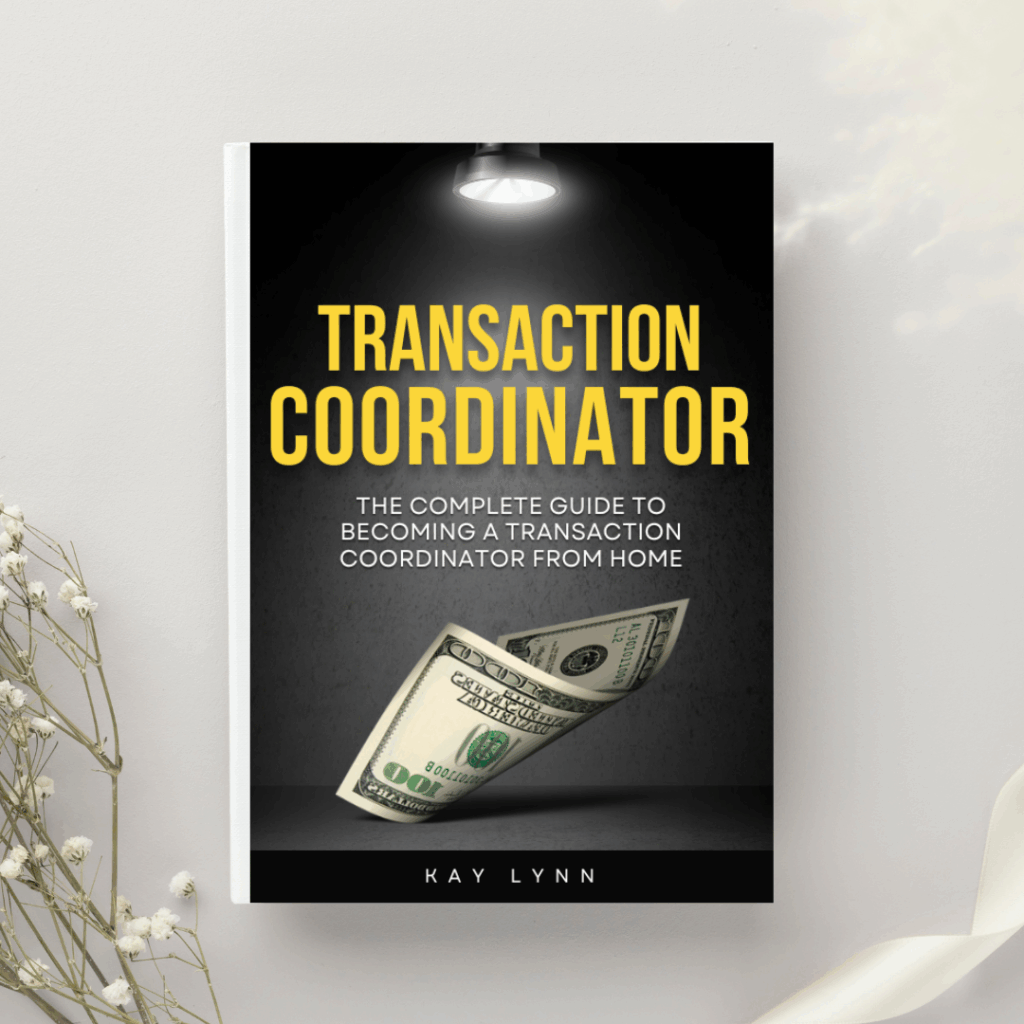

Instantly download our complete Transaction Coordinator Book and get everything you need in one place—whenever you need it. Inside, you’ll unlock all 20 training modules, plus direct links to all the spreadsheets, templates, and tools that TCs use to run a profitable business.