

How to Become a Transaction Coordinator From Home (Complete Beginner’s Guide)
The idea of working from home, setting your own schedule, and earning a reliable income has never been more appealing. For many people, the challenge isn’t motivation—it’s finding a legitimate work-from-home career that doesn’t require years of schooling, expensive certifications, or constant selling.
That’s where transaction coordination comes in.
If you’ve been searching for:
- how to become a transaction coordinator
- work from home transaction coordinator jobs
- transaction coordinator with no experience
- real estate remote careers
You’re in the right place.
This complete beginner’s guide explains exactly how to become a transaction coordinator from home, what the role involves, how much money you can make, and how beginners can realistically get started—even if you have zero real estate background.
What Is a Transaction Coordinator?
A transaction coordinator (TC) is the professional responsible for managing the administrative and compliance side of a real estate transaction from contract to close.
Once a buyer and seller agree on a contract, the transaction coordinator ensures:
- All documents are completed correctly
- Deadlines are tracked and met
- Required disclosures are signed
- Communication stays organized
- The transaction complies with state and brokerage rules
Transaction coordinators do not sell real estate. Instead, they support agents by keeping transactions running smoothly behind the scenes.
Why Transaction Coordination Is Ideal for Working From Home
Transaction coordination is uniquely suited for remote work because:
- Documents are digital
- Signatures are electronic
- Communication is online
- Files are stored in cloud systems
Most transaction coordinators work 100% from home, using only a laptop, internet connection, and transaction management software.
This makes it one of the most accessible and flexible work-from-home careers in real estate.
Who Can Become a Transaction Coordinator?
One of the biggest misconceptions is that you need to be:
- A licensed real estate agent
- An attorney
- Someone with years of experience
In reality, many successful transaction coordinators started as:
- Stay-at-home parents
- Administrative professionals
- Career changers
- Virtual assistants
- People completely new to real estate
What matters most is learning the process, not having prior titles.
Step 1: Understand What a Transaction Coordinator Actually Does
Before becoming a transaction coordinator, it’s essential to understand the role clearly.
A transaction coordinator:
- Reviews contracts for completeness
- Tracks deadlines and contingencies
- Manages disclosures
- Communicates with agents, lenders, and title companies
- Organizes documents
- Ensures compliance
They do not:
- Negotiate contracts
- Give legal advice
- Represent buyers or sellers
This distinction is important for compliance and confidence.
Step 2: Learn the Transaction Coordination Process
Every real estate transaction follows a general flow:
- Contract is signed
- Earnest money is submitted
- Inspections are scheduled
- Financing progresses
- Appraisal is completed
- Title work is finalized
- Closing occurs
A transaction coordinator manages this entire timeline.
This is where structured education becomes critical—because missing steps or deadlines can cause real problems.
Many beginners try to piece this together from random videos or forums, but that often leads to confusion. This is why structured learning environments—like a free TC Academy—are so valuable early on.
Step 3: Learn the Documents Transaction Coordinators Handle
Transaction coordinators work with:
- Purchase agreements
- Addenda and amendments
- Disclosures
- Inspection reports
- Repair agreements
- Closing statements
You don’t need to memorize every form on day one—but you do need to understand:
- What each document is
- When it’s used
- Who signs it
- Where it’s stored
This knowledge builds confidence quickly.
Step 4: Learn Deadline and Timeline Management
Deadlines are the backbone of transaction coordination.
Common deadlines include:
- Earnest money due date
- Inspection period
- Financing contingency
- Appraisal deadline
- Closing date
Transaction coordinators track these deadlines, send reminders, and follow up to ensure nothing is missed.
This is one of the most valuable skills a TC provides—and one of the most teachable.
Step 5: Learn Compliance and Brokerage Rules
Compliance is where transaction coordinators truly earn their value.
Each brokerage and state has:
- Required disclosures
- Filing standards
- Audit requirements
- Retention rules
A transaction coordinator ensures every file is compliant, which protects agents and brokerages from fines or legal issues.
This is another area where guided education is crucial—especially for beginners who don’t yet know what they don’t know.
Step 6: Learn the Tools Transaction Coordinators Use
Most transaction coordinators use:
- Transaction management software
- E-signature platforms
- Cloud storage
- Email and calendar systems
You don’t need advanced tech skills—just comfort learning systems step by step.
Many beginners are surprised how quickly this becomes second nature with the right training.
Step 7: Decide How You’ll Work (Employee vs Independent TC)
Transaction coordinators can work:
- In-house for a brokerage
- As independent contractors
- As virtual transaction coordinators
Many choose the independent route because it offers:
- Higher income per file
- Flexible schedules
- Control over workload
This choice affects pricing, contracts, and systems—another reason beginners benefit from clear guidance early on.
Step 8: Set Your Transaction Coordinator Pricing
Transaction coordinators are usually paid per transaction, not hourly.
Typical fees:
- $300–$600 per file
Income examples:
- 10 files/month × $400 = $4,000
- 20 files/month × $400 = $8,000
- 30 files/month × $400 = $12,000
Once systems are in place, many TCs manage multiple transactions efficiently.
Step 9: Learn How to Get Your First Clients
Most transaction coordinators get clients through:
- Real estate agents
- Brokerages
- Referrals
- Networking
- Online presence
The key is knowing how to:
- Communicate your value
- Explain your services clearly
- Build trust quickly
This is another area beginners often struggle with—until they see examples and scripts that work.
Step 10: Build Systems So You Can Work From Home Smoothly
The difference between overwhelmed TCs and confident ones is systems.
Systems include:
- Checklists
- Timelines
- Templates
- Communication workflows
Once these are in place, transaction coordination becomes predictable and manageable—even enjoyable.
How Long Does It Take to Become a Transaction Coordinator?
With focused learning:
- Basics can be learned in weeks
- First transactions often happen within 1–3 months
- Consistent income typically follows within 3–6 months
The timeline depends on training quality and implementation.
Common Beginner Mistakes (and How to Avoid Them)
Common mistakes include:
- Undercharging
- Missing deadlines
- Not understanding compliance
- Taking on too many files too soon
These mistakes are avoidable—especially when beginners learn in a structured environment rather than trial and error.
Why Structured Learning Matters for Beginners
Transaction coordination isn’t hard—but it is detailed.
Trying to learn everything:
- From random videos
- From outdated blogs
- From incomplete advice
Often leads to confusion and hesitation.
This is why many beginners choose to learn through a free transaction coordinator academy, where everything is laid out step by step in the correct order.
Learn Transaction Coordination the Right Way (Without Guessing)
If you’re serious about becoming a transaction coordinator from home, the smartest next step is guided education.
That’s exactly why we created our Free TC Academy.
Inside the academy, you’ll learn:
- How transaction coordination actually works in real life
- The full contract-to-close process
- What documents you handle and when
- How to track deadlines with confidence
- How to work with agents professionally
- How to avoid beginner mistakes
And best of all—it’s free.
Instead of piecing information together and hoping you’re doing it right, you can learn in a structured, beginner-friendly way designed specifically for people starting from scratch.
Final Thoughts: Becoming a Transaction Coordinator From Home Is Achievable
Transaction coordination is one of the most practical, flexible, and in-demand work-from-home careers available today.
If you:
- Like organization
- Want remote work
- Prefer structure over selling
- Want real income potential
This role may be an excellent fit.
The key is learning it correctly and confidently from the start.
And if you want a clear path without overwhelm, the Free TC Academy is the perfect place to begin.
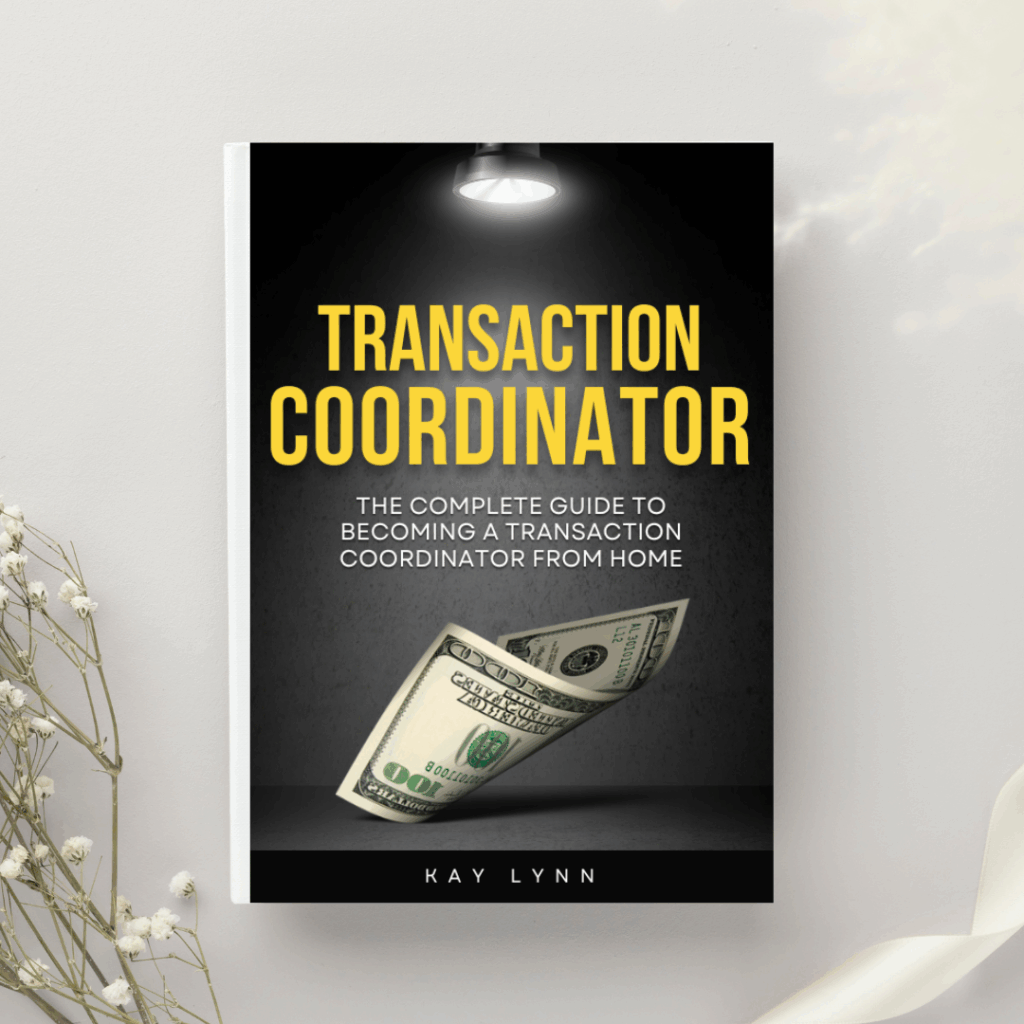

Instantly download our complete Transaction Coordinator Book and get everything you need in one place—whenever you need it. Inside, you’ll unlock all 20 training modules, plus direct links to all the spreadsheets, templates, and tools that TCs use to run a profitable business.