

How Transaction Coordination Works: Contracts, Deadlines, and Compliance Explained
Why Transaction Coordination Matters in Real Estate
Transaction coordination is one of the most critical—but often misunderstood—roles in real estate. While agents focus on lead generation, showings, and negotiations, transaction coordinators (TCs) are the professionals who ensure deals actually make it to the closing table.
If you’ve ever wondered how transaction coordination works, this guide breaks it down in plain language. We’ll walk through contracts, deadlines, compliance requirements, daily workflows, and the systems transaction coordinators use to keep everything organized and legal.
Whether you’re considering becoming a transaction coordinator, hiring one, or simply trying to understand the role, this article will give you a clear, realistic picture of how transaction coordination works from start to finish.
What Is Transaction Coordination?
Transaction coordination is the process of managing all administrative, contractual, and compliance-related tasks in a real estate transaction from the time a contract is signed until the deal closes.
A transaction coordinator acts as the organizational backbone of the transaction, ensuring:
- All documents are complete and accurate
- Deadlines are tracked and met
- Compliance requirements are satisfied
- Communication flows smoothly between all parties
Unlike a real estate agent, a transaction coordinator does not negotiate or provide legal advice. Instead, they focus on execution, organization, and accuracy.
The Role of a Transaction Coordinator Explained Simply
At its core, transaction coordination answers one question:
“What needs to happen next to get this deal closed?”
A transaction coordinator manages:
- Contracts and addenda
- Disclosures and compliance documents
- Deadline tracking
- Communication with agents, lenders, escrow, and clients
- File organization for brokerages and audits
This role is especially valuable because real estate transactions are deadline-driven and highly regulated. One missed date or missing form can delay or even cancel a deal.
Step 1: Opening the Transaction File
Receiving the Executed Contract
Transaction coordination officially begins once a purchase agreement is fully executed by all parties. At this point, the TC receives:
- The signed purchase contract
- Any addenda or counteroffers
- Initial disclosures
The transaction coordinator reviews the documents for completeness, ensuring:
- All required signatures are present
- Dates are filled in correctly
- Purchase price and terms match across documents
This initial review sets the tone for the entire transaction.
Step 2: Contract Review and Organization
Understanding the Contract
A transaction coordinator must understand the structure of real estate contracts, including:
- Purchase price and financing terms
- Earnest money deadlines
- Inspection periods
- Appraisal timelines
- Closing date
While TCs do not interpret contracts legally, they must understand how each clause affects deadlines and document requirements.
Organizing the Transaction File
Most transaction coordinators use digital systems to organize files. Common organization categories include:
- Contracts
- Disclosures
- Inspection documents
- Title and escrow documents
- Loan-related paperwork
Proper organization is critical for compliance and audits.
Step 3: Managing Deadlines (One of the Most Important Tasks)
Why Deadlines Matter in Transaction Coordination
Deadlines are the heartbeat of transaction coordination. Missing a deadline can result in:
- Loss of earnest money
- Contract termination
- Legal disputes
- Delayed closings
Transaction coordinators track deadlines such as:
- Earnest money deposit due dates
- Inspection contingency deadlines
- Appraisal deadlines
- Loan approval deadlines
- Closing dates
How Transaction Coordinators Track Deadlines
Most TCs use:
- Deadline tracking spreadsheets
- Transaction management software
- Calendar reminders
- Daily task checklists
This is where strong systems separate average transaction coordinators from great ones.
Step 4: Disclosure Management and Compliance
What Is Compliance in Transaction Coordination?
Compliance refers to ensuring the transaction meets all legal, brokerage, and state requirements. This includes:
- Required disclosures
- Timely delivery of documents
- Proper file documentation
Brokerages are audited regularly, and incomplete files can result in fines or penalties.
Common Disclosure Documents
Depending on the state, transaction coordinators manage disclosures such as:
- Seller property disclosures
- Agency disclosures
- Lead-based paint disclosures
- HOA documents
- State-required addenda
The TC ensures disclosures are:
- Delivered on time
- Signed correctly
- Stored in the transaction file
Step 5: Communication and Coordination
Who Transaction Coordinators Communicate With
Transaction coordinators act as the central communication hub for the transaction, interacting with:
- Real estate agents
- Buyers and sellers (administratively)
- Lenders
- Title and escrow companies
- Inspectors and appraisers
Clear communication prevents confusion, delays, and duplicate work.
What Transaction Coordinators Do NOT Do
It’s important to understand boundaries. Transaction coordinators typically do not:
- Negotiate contract terms
- Give legal advice
- Represent buyers or sellers
Their role is administrative and procedural, not advisory.
Step 6: Inspection and Appraisal Coordination
Managing Inspection Timelines
Transaction coordinators:
- Track inspection deadlines
- Ensure inspection reports are uploaded
- Confirm inspection responses are signed
They often remind agents when action is needed to keep the transaction moving forward.
Appraisal Coordination
While lenders order appraisals, transaction coordinators:
- Track appraisal deadlines
- Ensure appraisal reports are received
- Confirm any appraisal-related addenda are signed
This step is crucial for financed transactions.
Step 7: Loan and Title Coordination
Working With Lenders
Transaction coordinators:
- Track loan approval deadlines
- Ensure loan documents are delivered
- Communicate missing documentation requests
Working With Title and Escrow
TCs also coordinate with title and escrow companies to:
- Confirm escrow is opened
- Ensure title reports are delivered
- Track closing disclosures
- Confirm signing appointments
Step 8: Preparing for Closing
As the closing date approaches, transaction coordinators:
- Confirm all contingencies are removed
- Verify all required documents are signed
- Ensure compliance files are complete
- Confirm closing details with all parties
This is where attention to detail matters most.
Step 9: Closing the Transaction
On closing day, transaction coordinators:
- Confirm the transaction has recorded
- Ensure final documents are uploaded
- Mark the file as closed
A successful close means everything was done correctly behind the scenes.
Step 10: Post-Closing Compliance and File Retention
Even after closing, transaction coordinators:
- Ensure final compliance checks are complete
- Organize the final file for audits
- Store files according to brokerage requirements
This step protects the brokerage and agent long-term.
How Transaction Coordination Works as a Work-From-Home Career
Many transaction coordinators work:
- Remotely
- As independent contractors
- For multiple agents or brokerages
This flexibility is one reason transaction coordination has become a popular work-from-home career.
With the right systems—like spreadsheets, checklists, and templates—transaction coordinators can manage multiple transactions efficiently from anywhere.
Skills That Make Transaction Coordination Successful
Successful transaction coordinators typically have:
- Strong organizational skills
- Attention to detail
- Clear communication
- Time management abilities
- Comfort with contracts and deadlines
These skills can be learned and refined with proper training and tools.
Common Misconceptions About Transaction Coordination
Myth: It’s just paperwork
Reality: It’s deadline-driven project management
Myth: You need a real estate license
Reality: Many states do not require one
Myth: It’s overwhelming
Reality: Systems make it manageable and scalable
Why Systems and Templates Matter So Much
The difference between struggling and thriving as a transaction coordinator often comes down to systems.
Pre-made tools like:
- Deadline tracking spreadsheets
- Compliance checklists
- File organization templates
…save time, reduce errors, and increase confidence—especially for beginners.
Final Thoughts: Understanding How Transaction Coordination Works
Transaction coordination works because it brings structure, accountability, and organization to a complex process. By managing contracts, deadlines, and compliance, transaction coordinators protect agents, clients, and brokerages while ensuring deals close smoothly.
For anyone looking to work from home, earn reliable income, and build a skill-based career, transaction coordination offers a powerful opportunity.
Ready to Learn Transaction Coordination the Right Way?
If you want to learn exactly how transaction coordination works step by step, the fastest way is with the right tools already built for you.
👇 Download the course ebook below and get instant access to:
- Pre-made transaction coordination spreadsheets
- Contract and deadline tracking templates
- Real-world workflows you can actually use
- Systems designed for beginners and work-from-home transaction coordinators
This is an instant download, so you can start learning and organizing transactions immediately—without guessing or building everything from scratch.
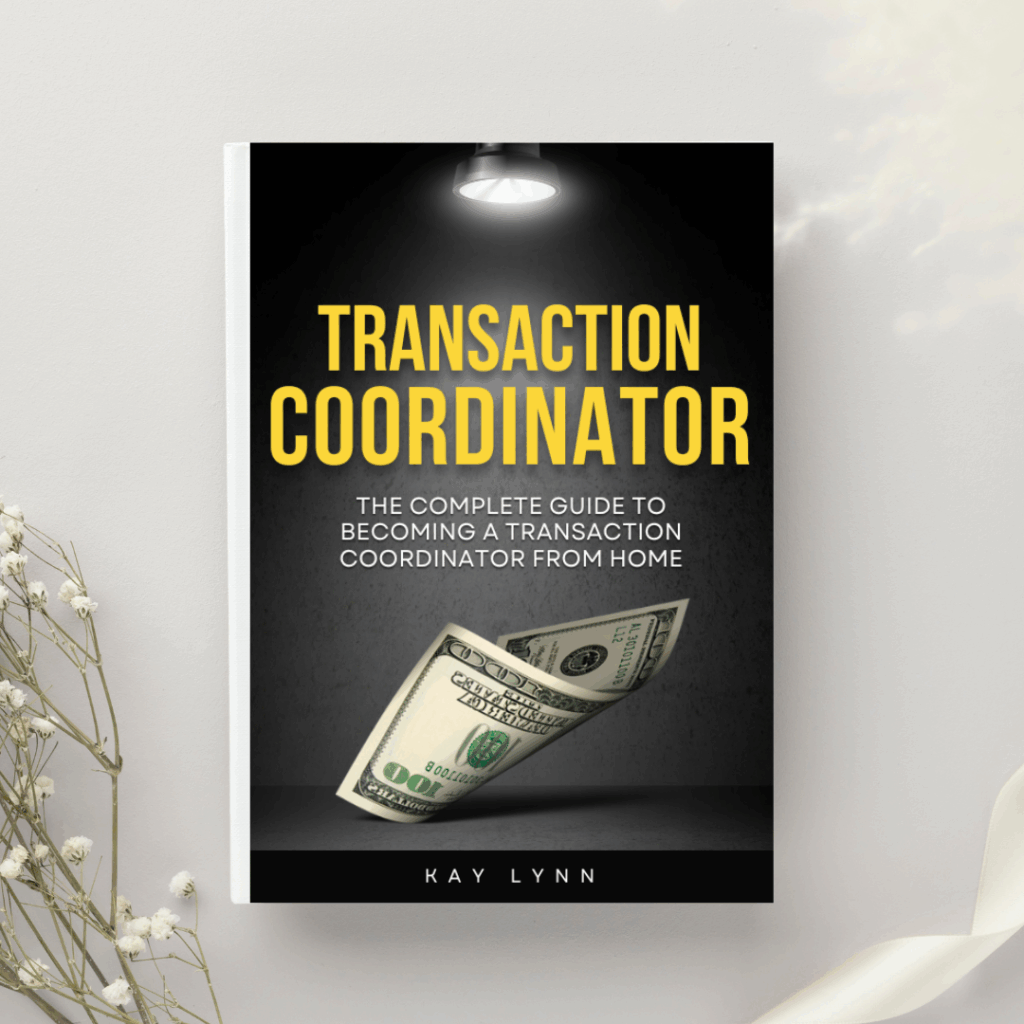

Instantly download our complete Transaction Coordinator Book and get everything you need in one place—whenever you need it. Inside, you’ll unlock all 20 training modules, plus direct links to all the spreadsheets, templates, and tools that TCs use to run a profitable business.