

How to Start a Transaction Coordinator Business from Home (2026 Guide)
Working from home and running a business with minimal overhead is a dream for many — especially in real estate. As a Transaction Coordinator (TC), you can build a flexible, scalable business with just a laptop, internet, and organization skills. If you’re ready to take control of your time and income, this step-by-step guide will walk you through everything you need to launch a TC business from home — and thrive.
Why a TC Business Is Perfect for Home Entrepreneurs
- Low overhead. No office rent. No commuting. All you need is a computer and internet.
- High demand. Agents are increasingly outsourcing admin work.
- Scalable. From solo operator to team leader — easy growth trajectory.
- Flexible schedule. Work from anywhere, set your hours, build your own client load.
- Recurring benefit. Once you build trust with agents, they keep coming back — and refer you to others.
Step 1: Plan & Define Your Business
1. Research the Market in Your Area
- Investigate how many agents operate in your city, county, and surrounding areas.
- Identify neighborhoods, brokerages, or small teams who most likely need TC support.
- Research common TC rates in your region (listing, buyer, dual-side, etc.).
- Check local regulations and required disclosures — each state has different compliance rules.
2. Choose a Business Structure
Decide whether you want to register as:
- A Sole Proprietor (simple, fast)
- An LLC (limited liability + more professional)
- A small business corporation (if you plan to grow)
Consider consulting an accountant or attorney — simple bookkeeping + liability protection can save you headaches.
3. Pick a Business Name & Branding
- Choose a professional but easy-to-remember name (like “Your Name TC Services” or “Pro TC Solutions”).
- Grab a domain name. Preferably something short, easy to spell.
- Create a simple logo, business card design, and email address.
4. Set Up Basic Business Tools
- Business email (e.g. yourname@yourdomain.com)
- Business phone or Google Voice
- Payment methods (PayPal, Zelle, bank transfer, invoicing)
- Basic accounting / bookkeeping tool or spreadsheet
Step 2: Build Your Online Presence
1. Build a Simple Website
Minimum pages:
- Home / About
- Services & Pricing
- Contact / Intake Form
- Testimonials / Case Studies (as you get them)
- Resources / Blog / Free Tools (optional, but powerful)
Your site should clearly communicate what you do, who you help, and how to contact you.
2. Create a TC Service Page
Clearly list:
- What’s included (buyer, seller, listing, dual-side, add-ons)
- Pricing (flat fee or commission-based)
- What agents get when they hire you (checklist, compliance, peace of mind, faster closings)
3. Create an Intake / Client Onboarding Form
Use form builders like Google Forms, Typeform, or similar — collect:
- Agent’s name, contact info, license number
- Client’s names (buyer, seller)
- Property address
- Contract date, closing date
- Type of service (buyer, seller, dual-side)
- Special instructions or deadlines
4. Add Social Proof & Free Resources
Even if you’re new, you can:
- Offer a free checklist or downloadable template (e.g. “Pre-Closing Checklist PDF”)
- Use that free download to capture emails — build a mailing list
- Add a Terms & Conditions / Disclaimer page (ex: you’re not giving legal advice)
Step 3: Setup Your Workflow & Systems
1. Choose a CRM / Transaction Management Tool
Pick from established platforms: e.g. Skyslope, Dotloop, Paperless Pipeline, TC Docs, or even simple tools like Trello / Airtable.
Set up:
- Folder structure per transaction
- Templates for buyer, listing, dual-side
- Checklists for every stage (contract to close, inspections, contingencies, closing)
- Email templates for outreach, status updates, reminders
- Deadline reminders & calendar integration
2. Setup Document Storage & Compliance Protocols
Use cloud storage (Google Drive, Dropbox, etc.) to store files securely.
Have separate folders — by client, by transaction — for contracts, disclosures, inspection docs, title/escrow, invoices, etc.
Use naming conventions like: “YYYY-MM-DD — Property Address — Buyer/Seller” for consistency.
3. Create Communication Plan
Plan to contact all involved parties: agent, buyer, seller, lender, title, etc.
Send a “Welcome Email” once you get the contract — this includes your role, contact info, next steps, and timeline.
Provide weekly / bi-weekly updates depending on transaction speed.
Step 4: Set Your Services & Pricing
1. Define Your Services
Common offerings:
- Buyer Representation Coordination
- Seller / Listing Coordination
- Dual-Sided Coordination (both sides)
- Optional Add-Ons: Rush Fees, Compliance Only, Document Templates, etc.
2. Choose a Pricing Model
- Flat-fee per transaction (easiest)
- Tiered pricing (buyer, seller, dual-side)
- Add-on fees (rush, compliance only, extra services)
3. Create a Client Agreement / Service Contract
Have a simple agreement that outlines scope of work, fees, payment terms, disclaimers (you’re not giving legal advice), and confidentiality.
Step 5: Find Your First Clients
Even with no experience, you can land your first clients fast. Here’s how:
- Join Real Estate Local Facebook Groups: Post that you’re offering new TC services, maybe offer a discount (first 2–3 clients cheap or free in exchange for testimonials).
- Connect with Local Realtors & New Agents: Reach out directly (email or social) and offer a free consult or audit.
- Tap Into Your Network: Even if people you know aren’t in real estate — they might know someone. Word-of-mouth works.
- Offer a “Free Trial” or Discounted First Transaction to build reviews and testimonials.
- List Yourself on TC Directories (if available) and on local real estate forums/sites.
- Create Valuable Content: Free blog posts, checklists, templates that attract agents.
Step 6: Market & Promote Your Business
1. Content Marketing
Start a blog — write about real estate transactions, compliance tips, how agents save time using a TC, “what does a TC do,” etc. This helps you rank in search engines and brings organic traffic.
2. Social Media Presence
Create social accounts (FB, X/Twitter, LinkedIn, maybe Instagram) presenting yourself as a TC business. Post:
- Client success stories
- Before/after (how messy things were vs. cleaned up by you)
- Tips & “Did you know?” real estate factoids
- Free checklist downloads to drive website visits
3. Network with Real Estate Agents & Brokerages
Attend local real estate meetups, office meetings, open houses — get to know agents. Offer to show them how you can save them time and reduce errors.
4. Run Paid Ads (If Budget Permits)
Use targeted ads on Facebook or Google (search ads targeting “real estate transaction coordinator needed,” “hire a TC,” “real estate assistant,” etc.) — can bring clients fast if done right.
5. Leverage Referrals & Testimonials
After you complete a few transactions — ask clients (agents) for testimonials. Use these on your website and in marketing. Happy clients refer other agents.
Step 7: Operations & Business Management
1. Bookkeeping & Accounting
Track every transaction: income, expenses, commissions, tax obligations.
Use a simple spreadsheet or software like QuickBooks, or hire a bookkeeper once volume grows.
2. Client Agreements & Record-Keeping
Keep signed service contracts, records of communication, invoices, compliance docs. Store them securely.
3. Time Management & Workload Planning
When you have multiple closings at once — use your CRM to create a timeline for each file.
Use a daily or weekly schedule to stay organized.
4. Maintain Professionalism & Compliance
Make sure you comply with state laws. Avoid giving legal advice if not licensed. Use disclaimers.
Always double-check documents, names, dates — errors = liability and damage to reputation.
Step 8: Scale & Grow Your TC Business
Once you have steady clients, it’s time to scale.
- Hire a Junior TC or Virtual Assistant — outsource checklists, data entry, follow-ups.
- Use Advanced CRM Tools — automation, reminders, bulk email templates.
- Offer Additional Services — e.g. Listing Launch Packages, Compliance Reviews, Admin Assistance, Virtual Assistant Services.
- Partner with Local Brokerages — show them how you save them time, tighten compliance, reduce liability.
- Build a Referral Network — happy agents refer you to other agents.
- Offer Training — start a small “TC Workshop” or “TC Bootcamp” for new agents or aspiring TCs.
Common Mistakes to Avoid (And How to Prevent Them)
| Mistake | How to Avoid |
|---|---|
| 🔸 Failing to use a CRM → chaos and missed deadlines | Start with a CRM or even basic system (Trello, Airtable) from Day 1 |
| 🔸 Not having a written agreement → payment issues or misunderstandings | Always send a service contract before starting |
| 🔸 Poor communication with clients/agents | Always send “Welcome Email,” regular updates, and confirmations |
| 🔸 Overworking — burnout | Plan manageable workload; scale gradually; outsource admin tasks |
| 🔸 Not separating business and personal finances | Open a separate bank account; track income/expenses properly |
| 🔸 Ignoring compliance & legal disclaimers | Be clear about your role (administrative), not legal advice; store documents properly |
Sample Launch Checklist (First 30 Days)
- Choose business structure & register (if needed)
- Build website & service page
- Set up business email & contact form
- Choose a CRM and build first workflow template
- Build buyer, seller, and listing checklists
- Create intake form & welcome email template
- Set pricing and service offerings
- Write 1–2 blog posts or resource pages for SEO
- Join local real estate FB groups and post offering services
- Network with 5–10 agents or local brokerages
- Offer discounted or free first client in exchange for testimonial
- After first closing, request review / testimonial
- Add testimonial to website
- Build referral strategy
- Track income/expenses from first job
Final Thoughts
Launching a TC business from home in 2025 is more attainable than ever. With minimal startup costs, a clear system, consistent marketing, and professional service — you can build a business that gives flexibility, growth, and steady income.
A strong foundation — good CRM, clear workflows, communication templates, and professionalism — is everything. The real key is taking action. Build your website, set up your CRM, outreach to agents.
If you stay consistent, treat clients well, and deliver quality service — you’ll not only land your first clients quickly, you’ll scale to a thriving TC agency in months.
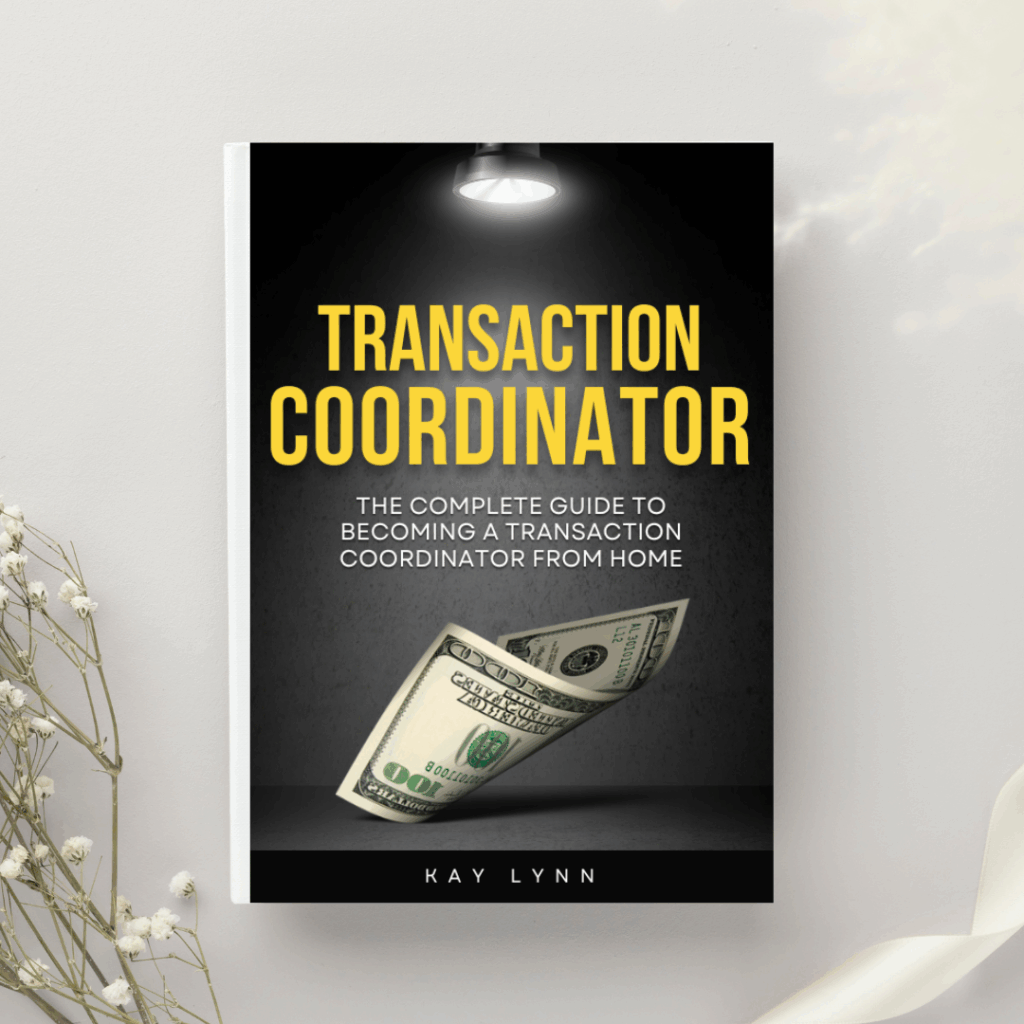

Instantly download our complete Transaction Coordinator Book and get everything you need in one place—whenever you need it. Inside, you’ll unlock all 20 training modules, plus direct links to all the spreadsheets, templates, and tools that TCs use to run a profitable business.